Estimated reading time: 20 minutes
Introduction: SEO Doesn’t Look Like SEO Anymore
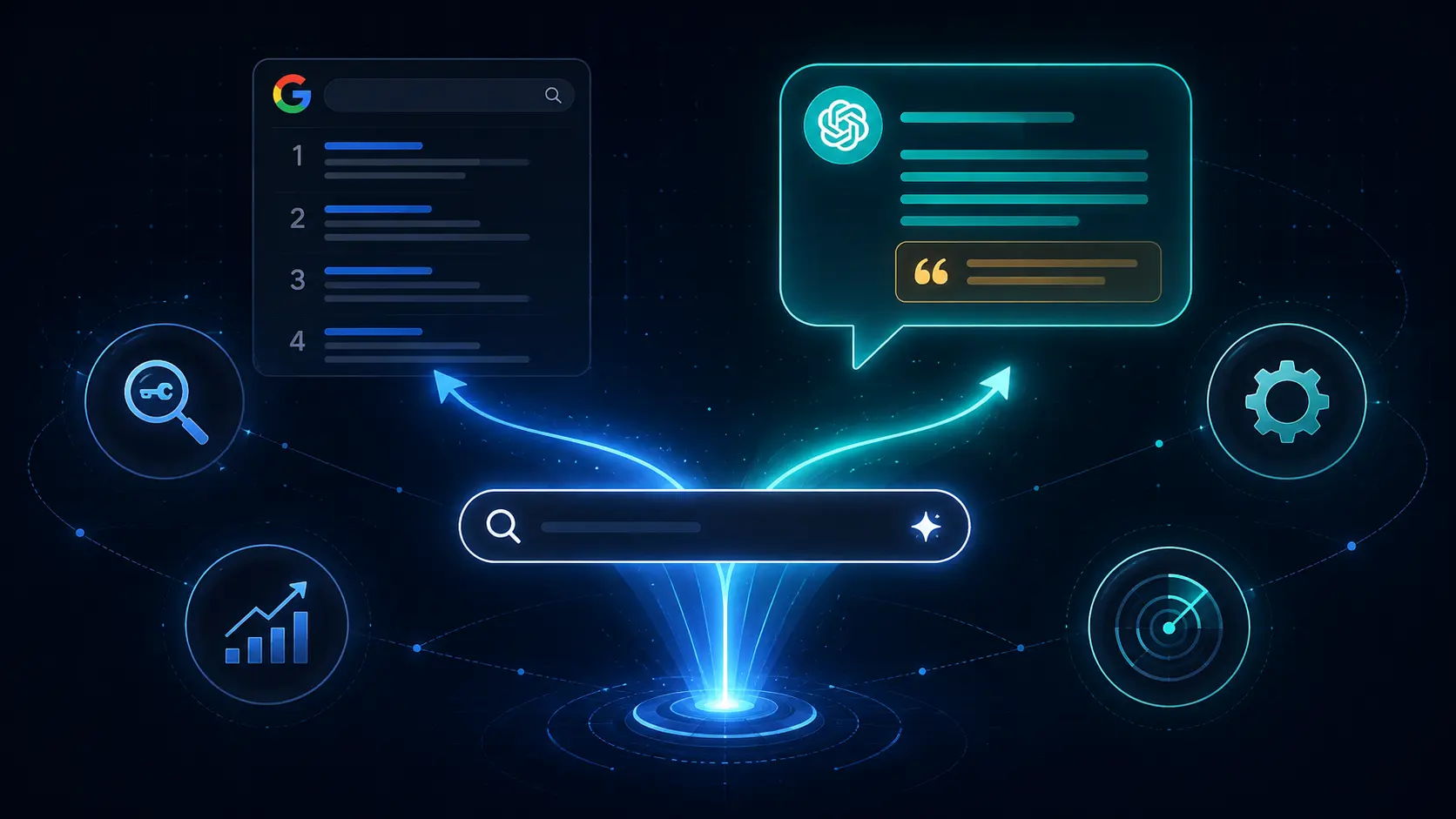
A few years back, SEO meant one thing. Rank on Google’s blue links, get the click, done. That’s not the full picture anymore. Now people ask ChatGPT their questions directly, Perplexity gives them a summary with sources, and Google’s own AI Overviews answer most queries before a single link even loads. Some of those answers never send a visitor to your website at all. That’s exactly why picking the best AI SEO tools 2026 has to offer matters so much right now.
The tools that only track your keyword rankings are already telling you half the story. You need to know whether ChatGPT is citing your brand too, not just whether you’re sitting at position three on Google.
I’ve spent time testing this category properly, not just skimming homepage screenshots. This guide breaks down the best AI SEO tools 2026 has on offer, organized by what job each one actually does. Keyword research, content optimization, technical fixes, and the newer category everyone’s talking about now: AI visibility tracking, also called GEO (Generative Engine Optimization). You’ll also find a section near the end covering some genuinely underrated tools that never make it onto the popular lists.
What Are AI SEO Tools?
AI SEO tools are software platforms that use artificial intelligence to handle parts of search optimization that used to take hours of manual work. That includes things like:
- Finding keywords and clustering them into content plans automatically
- Scoring your content against what’s already ranking, in real time
- Auditing your site for technical issues and, in some cases, fixing them automatically
- Tracking whether AI platforms like ChatGPT, Perplexity, and Gemini are mentioning or citing your brand
The best AI SEO tools of 2026 don’t just automate the boring parts. The strongest ones actually change how you plan strategy, not just how fast you execute it. One recent industry survey found that more than half of marketers are already using generative AI specifically for SEO strategy work, not just content drafting. That number is only going up.
Why AI Visibility Changed the Whole Game

Here’s a stat worth sitting with. Google’s AI Overviews now show up in a majority of informational search queries, and that share keeps climbing every quarter. Separately, Semrush’s own research suggests that AI search visitors could actually overtake traditional search visitors for digital marketing topics within the next couple of years.
What that means in plain terms: you can rank number one on Google for a keyword and still be invisible if the AI answer sitting above your listing doesn’t mention you at all. That’s the gap the newest wave of AI SEO tools in 2026 has introduced platforms to close. Instead of only tracking rankings, they now track citations, meaning whether an AI answer actually names your brand or links to your content when someone asks a related question.
How to Choose the Best AI SEO Tools for Your Business
Not every tool in this category does the same job, and a lot of “best of” roundups blur that line in a way that leads people to buy the wrong thing. Before you pick anything, run it through these checks:
1. Does it cover AI visibility, not just Google rankings? Traditional SEO metrics still matter. But if a tool only tracks blue-link positions and says nothing about ChatGPT or AI Overviews, it’s already behind where the industry is in 2026.
2. Is the AI doing real analytical work, or just wrapping a chatbot? Some tools slap a “Generate with AI” button on a basic keyword list and call it innovation. The tools worth paying for actually score your content against live search results, or flag specific technical problems you’d otherwise miss.
3. Does it fit into your existing workflow? A tool that doesn’t connect to your CMS, your Google Docs, or your existing reporting just adds friction. Check for direct integrations before you commit.
4. Can you trust the data? Cross-check any new tool’s keyword volumes and difficulty scores against Google Search Console for a few weeks. If the numbers are consistently off, the recommendations built on top of that data will be off too.
5. Is the pricing predictable at your scale? Some tools charge per seat, some per site, some per word generated. Know your actual usage before you commit to a plan that punishes growth.
With that out of the way, here’s the full list.
Best AI SEO Tools 2026 — Full Comparison Table
| # | Tool | Category | Best For | Starting Price | Free Tier | AI Visibility Tracking |
|---|---|---|---|---|---|---|
| 1 | Semrush One | All-in-one | Agencies wanting one platform for everything | ~$140–165/mo | No | Yes |
| 2 | Ahrefs (Brand Radar) | Backlinks + AI visibility | Backlink quality + citation tracking | ~$29/mo (entry) | No | Yes |
| 3 | Surfer SEO | Content optimization | Teams publishing content regularly | ~$79/mo | No | Limited |
| 4 | Clearscope | Content optimization | Agencies managing multiple writers | Premium | No | No |
| 5 | Frase | Content briefs + GEO | Solo SEOs and small teams | ~$39/mo | No | Yes |
| 6 | SE Ranking | All-in-one + AI visibility | Small businesses, consultants | Mid-range | Trial only | Yes |
| 7 | MarketMuse | Topical authority planning | Large content libraries, publishers | Premium | No | No |
| 8 | Jasper | AI writing | Marketing teams, multi-format content | ~$40–50/mo | No | No |
| 9 | Writesonic | AI writing | Bloggers, small teams | Budget-friendly | Limited trial | No |
| 10 | Alli AI | Technical SEO automation | Agencies managing multiple sites | Specialized | No | No (but fixes AI crawler access) |
| 11 | Mangools | Keyword research | Beginners, small businesses | Under $50/mo | No | No |
| 12 | Ubersuggest | Entry-level SEO | Absolute beginners, students | Free tier | Yes | Limited |
Quick-Read Summary:
Best overall: Semrush One or Ahrefs – pick based on whether you value breadth (Semrush) or backlink/citation depth (Ahrefs)
Best value for money: Frase – content optimization + GEO scoring in one, well under half the price of Surfer or Clearscope
Best free option: Ubersuggest – only tool on this list with a genuinely usable free tier
Best for technical SEO at scale: Alli AI – the only tool here that fixes issues automatically instead of just flagging them
Best for AI writing: Jasper for teams, Writesonic for solo bloggers on a budget
The Best AI SEO Tools 2026: Full Breakdown
A quick note before you scroll through this. Pricing across every SEO tool shifts often, sometimes every few months. Treat the numbers below as a starting point and confirm current pricing on each provider’s site before you buy or link to anything.
1. Semrush One: Best All-in-One AI SEO Platform
Best for: Agencies and marketing teams that want one login for everything
Pricing: Plans generally start around $140 to $165 per month, billed annually

Semrush has quietly rebuilt itself around AI over the past couple of years, and Semrush One is the result. You get over 50 tools in one place covering SEO, content, PR, ads, and market research, plus a dedicated AI Visibility Toolkit that tracks how your brand shows up across ChatGPT, Perplexity, Gemini, and Google AI Overviews.
The standout feature is Semrush Copilot, a built-in assistant that scans your account data and flags problems in plain language. It’ll point out technical issues, toxic backlinks, sudden traffic drops, and keyword gaps, then hand you a recommendation card instead of a raw spreadsheet.
One honest caveat worth knowing before you buy: an independent review from Profound flagged that Semrush’s AI Visibility Toolkit currently lacks CDN integration. In practice, that means it can miss cases where a firewall or bot rule is quietly blocking AI crawlers from reading your content. You could look “visible” inside the Semrush dashboard while actually being invisible to the AI models themselves. Worth checking manually if AI visibility is your main reason for buying.
2. Ahrefs (Brand Radar): Best for Backlinks and AI Citation Tracking
Best for: Teams that care equally about backlink quality and AI citation tracking
Pricing: Entry plans now start around $29 per month, scaling up significantly for full Brand Radar access

Ahrefs built its name on the largest, most frequently refreshed backlink index in the industry, backed by 15 years of search data and a keyword database running past 100 billion entries. That foundation is what makes its AI features genuinely useful rather than bolted on.
Brand Radar, its AI visibility tool, monitors your brand across more than 240 million monthly prompts, and those prompts come from real People Also Ask data rather than made-up test queries. It covers six AI platforms (ChatGPT, Perplexity, Gemini, Copilot, Google AI Overviews, and Google AI Mode), plus YouTube, TikTok, and Reddit. It separates mentions (how often your brand comes up) from citations (which sites AI links to actually), which matters a lot if your goal is earning real traffic, not just name recognition.
On the technical side, Ahrefs’ Site Audit now includes Patches, which auto-fixes meta tags without needing a developer, and an AI Detector that shows what percentage of a page’s content looks AI-generated.
3. Surfer SEO: Best for Content Optimization
Best for: Content teams publishing regularly who want a repeatable optimization workflow.
Pricing: Essential plan around $79 per month (annual billing), Scale plan around $175 per month for agencies

Surfer’s Content Editor has been the industry standard for real-time content scoring for a while now, and the 2026 version pushed further into AI search territory. It added Auto-Optimize for one-click improvement suggestions, a Humanizer tool that reduces AI-detection risk on assisted content, and messaging that now explicitly targets winning AI answers, not just Google rankings.
The Essential plan gives you 30 content editor articles and 5 AI-written articles a month, which covers most small to mid-sized content operations. It integrates directly with Google Docs and WordPress, so you don’t have to copy and paste between tools. One thing to know going in: content scoring for classic Google optimization is very reliable, but the GEO and AI-citation side of Surfer is newer and less proven than its core product.
4. Clearscope: Best Premium Content Optimization for Agencies
Best for: Agencies managing several writers who need simple, accurate scoring.
Pricing: Premium tier, positioned above most competitors on this list

Clearscope scores your draft against what’s actually ranking for your target keyword, then hands you a clean readability and relevance score that’s easy to explain to a writer who isn’t an SEO specialist. It doesn’t try to do everything Semrush or Ahrefs does. It does one thing (content scoring) and does it accurately, which is exactly why agencies keep paying the premium price.
5. Frase: Best Value Pick for Solo SEOs and Small Teams
Best for: Solo marketers and small teams who want content optimization and AI visibility without paying for two separate tools.
Pricing: Around $39 per month

More than one independent reviewer has called Frase the most underrated tool in this entire category, and after using it, that’s a fair label. It combines automated content briefs, an editor, and dual scoring: one score for traditional SEO, another for GEO performance, all inside a single, much cheaper subscription than Surfer or Clearscope.
If you’re a solo SEO or a small team trying to cover both traditional search and AI visibility without running two separate subscriptions, Frase is probably your best starting point.
6. SE Ranking: Best Affordable All-in-One With AI Visibility
Best for: Small businesses and consultants who want AI visibility tracking without enterprise pricing
Pricing: Positioned below Semrush and Ahrefs, accessible for solo consultants

SE Ranking built a genuinely useful AI SEO layer on top of its existing audit, rank tracking, and content tools, without pushing its pricing into pure enterprise territory. It gives you a central workspace for audits, rankings, backlinks, and content, and applies AI to surface actionable insights from that data rather than just dumping numbers on a dashboard. For a small business that wants AI visibility tracking without a $140+ monthly commitment, this is usually the better starting point than Semrush.
7. MarketMuse: Best for Topical Authority and Content Planning
Best for: Publishers managing large content libraries, not single articles
Pricing: Premium, generally overkill for small teams

MarketMuse is built around one specific job: mapping out an entire topic instead of optimizing a single page. For a publisher managing 500 or more posts, it’s genuinely in a different league than the per-article optimizers on this list. For most small businesses or solo SEOs, though, it’s more tool than you need, and the learning curve is steeper than something like Frase or Surfer.
8. Jasper: Best AI Writing Assistant for Marketing Teams
Best for: Marketing teams accelerating first drafts across multiple content formats.
Pricing: Typically $40 to $50 per month per seat

Jasper is built for speed. Feed it a brief and a brand voice profile, and it produces first drafts across blog posts, ads, and social copy in a consistent tone across multiple writers. It works best paired with a clear brief and a real editing pass afterward, not as a publish-as-is tool. Teams that skip the editing step usually end up with content that reads exactly like what it is.
9. Writesonic: Best for Bloggers and Small Teams
Best for: Solo bloggers and small teams that need speed over deep customization
Pricing: Budget-friendly, aimed at individuals rather than agencies

Writesonic moves from a keyword input to a usable draft quickly, without the heavier setup some enterprise tools require. It benefits a lot from a clear content strategy going in and a proper editing pass coming out, same as Jasper. If you’re a blogger who needs fast first drafts on a tight budget, it does the job.
10. Alli AI: Best for Technical SEO Automation at Scale
Best for: Agencies or businesses managing SEO across multiple sites
Pricing: Specialized, priced for portfolio-level use

Alli AI works differently from most tools on this list. Instead of just flagging technical issues, it implements them across every matching page on every site you connect. Set one rule, like “add target keyword to all H1 tags,” and it deploys that rule across thousands of pages in under a minute, no developer or FTP access required.
Its standout 2026 feature is AI Crawler Enablement. A lot of modern sites built with React, Vue, or Next.js render blank to AI crawlers like ChatGPT, Perplexity, and Claude, because those crawlers don’t execute JavaScript. Alli AI’s data shows this affects around 63 percent of modern sites. It fixes the problem by serving pre-rendered HTML specifically to AI bots, which means your content actually becomes readable to the AI systems deciding whether to cite you. That’s a genuinely rare feature, and one most marketers evaluating this category don’t even know to look for.
11. Mangools: Best Budget Keyword Research Tool
Best for: Beginners and small businesses that need solid keyword research without a steep learning curve
Pricing: Generally under $50 per month

Mangools trades some of the raw data depth of Ahrefs and Semrush for a much friendlier interface and a lower price tag. Core keyword research, SERP analysis, and rank tracking are all covered well. Its backlink index is smaller than Ahrefs’, but for a small business just getting keyword research off the ground, that trade-off is usually worth it.
12. Ubersuggest: Best Free Starting Point
Best for: Beginners, students, and very small sites just starting with SEO
Pricing: Free tier available, paid plans stay budget-friendly

Ubersuggest’s free tier covers basic keyword research and site audits, which is more than enough to validate whether SEO is worth investing in before spending anything. Its AI search tracking features exist but are more limited in platform coverage compared to SE Ranking or Ahrefs. Think of it as a starting point, not a long-term solution once your site starts growing.
How These AI SEO Tools Work Together (A Real Workflow)
Here’s how a realistic AI SEO stack actually connects in practice, once you move past testing individual tools:
Step 1: Research the keyword. Start in Ahrefs or Semrush to find a keyword with real search volume and a difficulty score you can realistically compete for.
Step 2: Build the content brief. Run that keyword through Frase or Surfer to get an automated brief based on what’s already ranking, plus a target GEO score if AI visibility matters for that topic.
Step 3: Write or draft the content. Either write it yourself using the brief, or use Jasper or Writesonic to generate a first draft, then edit it properly before it goes anywhere near “publish.”
Step 4: Optimize against the score. Paste the draft back into Surfer or Clearscope, and revise until your content score is solid, not just “good enough.”
Step 5: Fix technical issues. Run a site audit in Semrush or Ahrefs, and if you’re managing multiple sites or a large site, let Alli AI handle bulk technical fixes automatically.
Step 6: Publish and track. Publish the piece, then track both its Google ranking and its AI visibility using Brand Radar or SE Ranking’s AI tracking, so you know if ChatGPT and Perplexity are actually citing it.
Step 7: Review and adjust. Once a month, check which pages are earning AI citations and which aren’t, then update the ones falling behind instead of only chasing new content.
Realistic Monthly Cost for an AI SEO Stack
Here’s a practical breakdown for a small team publishing consistently, not running everything on this list at once.
| Tool | Plan | Monthly Cost |
|---|---|---|
| Ahrefs | Starter | $29 |
| Frase | Standard | $39 |
| SE Ranking | Essential | Mid range |
| Jasper | Starter | $40 to $50 |
| Alli AI | Only if managing multiple sites | Specialized |
You don’t need all five from day one. Start with Ahrefs or SE Ranking for research and Frase for content briefs. Add a writing assistant once your output volume actually justifies it, and only add Alli AI once you’re managing more sites than you can fix manually.
Common Mistakes When Choosing AI SEO Tools
Buying an all-in-one platform before you know your actual bottleneck. If your real problem is thin content, an expensive all-in-one platform’s technical audit features won’t fix that. A focused content optimization tool will.
Trusting AI-generated keyword data without checking it. Cross-reference any new tool’s numbers against Google Search Console for a few weeks before trusting it fully. Some tools drift noticeably from real performance data.
Publishing AI-drafted content without a proper edit. Every AI writing tool on this list performs best as a first-draft accelerator, not a publish-as-is solution. Readers and search engines both notice the difference.
Ignoring AI visibility until traffic already drops. Waiting until you notice a decline to start tracking AI citations means you’re already behind. It’s cheaper and easier to monitor early than to recover visibility later.
Quick FAQ about Best AI SEO Tools 2026
Semrush and Ahrefs remain the strongest all-in-one platforms for research, technical SEO, and AI visibility tracking together, while Surfer SEO and Frase lead specifically for content optimization at different price points
Ubersuggest offers the most usable free tier for basic keyword research and site health checks, though its AI visibility tracking is more limited than paid competitors.
Not necessarily. Semrush, Ahrefs, and SE Ranking already include AI visibility tracking inside their broader platforms. A standalone tool only makes sense if you want deeper, dedicated citation analysis than those platforms provide.
No, but they overlap. Traditional SEO optimizes for ranking in classic search results. GEO (Generative Engine Optimization) optimizes for being cited or mentioned inside AI-generated answers from tools like ChatGPT and Google AI Overviews. Most sites need both in 2026, not one or the other.
Generally yes for established platforms like Ahrefs and Semrush, though it’s still worth cross-checking keyword volume estimates against Google Search Console, since accuracy varies more on newer or smaller tools.
Secret Section: Best AI SEO Tools 2026 Most People Don’t Know About
These tools rarely show up on the popular “best AI SEO tools” roundups, but they’re genuinely worth knowing about, especially if you’re already past the basics.
1. Rankscale.ai
A specialist tool built specifically around AI citation tracking rather than trying to be a full SEO suite. If your only goal is understanding whether AI platforms are citing your brand, a focused tool like this can give you cleaner data than a bolted-on feature inside a bigger platform.
2. Profound
Another GEO-focused specialist, built around tracking citations, visibility, and competitive ranking specifically inside AI answer engines. It’s the kind of tool that shows up in industry reviews as a trusted benchmark for evaluating whether other platforms’ AI visibility claims actually hold up, which says a lot about how seriously it’s taken by people who work in this space daily.
3. DataForSEO
Most marketers have never heard of DataForSEO directly, because it works behind the scenes. It’s a raw SEO data API that a lot of the tools on this list quietly build on top of. If you’re technical enough to work with an API directly, you can pull the same underlying data these platforms use, often for a fraction of the cost of the finished product.
4. KIME
A small AI visibility platform out of Denmark that most people outside a tight circle of SEO practitioners haven’t heard of. As of early 2026, it had a few hundred active users, but what makes it worth mentioning is how directly responsive the team has been to user feedback, shipping requested improvements within weeks rather than the usual months-long roadmap cycle bigger platforms run on.
Conclusion: Tools Are the Easy Part, Strategy Is the Hard Part
There’s no single best AI SEO tool for 2026. There’s a best tool for whatever your actual bottleneck is right now. If your content isn’t ranking, fix that with a content optimization tool before buying an all-in-one platform. If you don’t know whether AI platforms are even mentioning your brand, start tracking that before spending more on content.
Pick one tool at a time, based on the problem you actually have, not the one with the flashiest feature list.
If you’d rather have your SEO tool stack and strategy built around your actual site instead of testing a dozen platforms yourself, that’s exactly the kind of work we do at Napnox. Reach out, and we’ll help you figure out what your site genuinely needs.